


Omikuji are sealed paper fortunes that you draw at a jinja (Shinto shrine) for a small offering, and drawing one is one of the pleasures of a visit. It is easy to celebrate “excellent luck” or groan at “bad luck,” but omikuji carry a deeper meaning, along with some customs that are surprisingly little known. Using the unusual omikuji of Meiji Jingu as an example, this article explains what omikuji are really for, and how to keep or return yours once you have drawn it.
目次
Omikuji Without “Excellent Luck” or “Bad Luck”

Most omikuji state your fortune, from daikichi (“excellent luck”) and kichi (“good luck”) to kyo (“bad luck”). The omikuji of Meiji Jingu in Tokyo, however, say nothing about luck at all. Instead, each one bears a waka poem by Emperor Meiji, known as gyosei, or by Empress Shoken, known as miuta. Meiji Jingu is the jinja where the two of them are enshrined, and its omikuji use 30 poems chosen from their waka. A poem on its own may be hard to interpret, but the back of each slip explains its meaning in detail, and some come with an English translation.
A Message from the Kami About What You Need Right Now
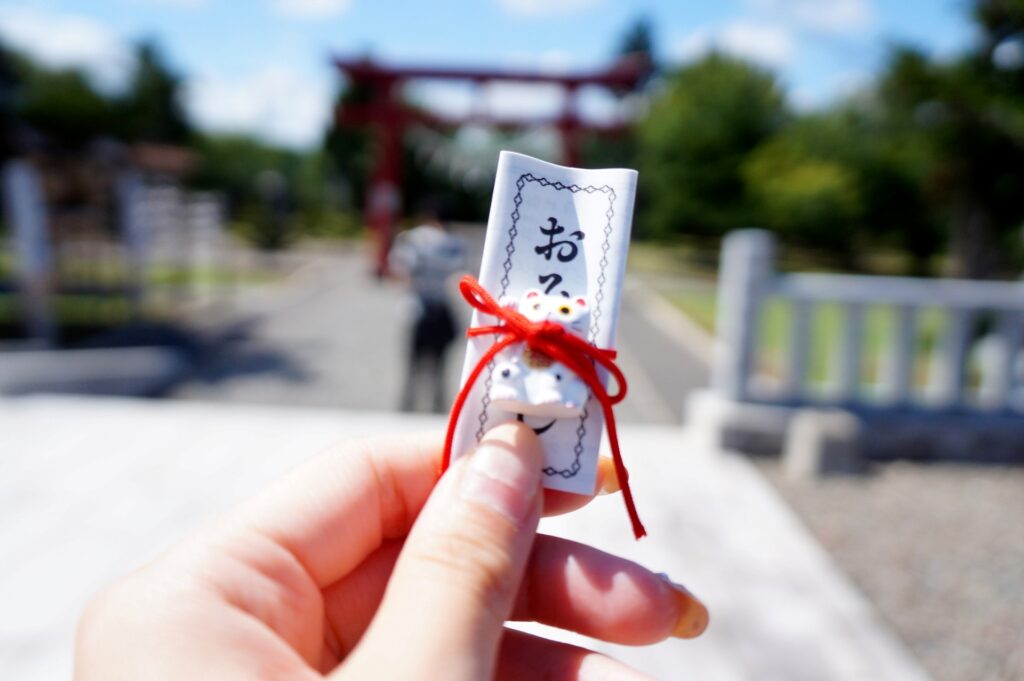
An omikuji without a fortune may feel a little unsatisfying. Yet the true role of omikuji is for the kami to tell you what you most need right now, or to offer you advice.
So rather than reading your omikuji once and setting it aside, receive it with care as a message from the kami. After you draw one, we recommend keeping it in your wallet or bag, or in a desk drawer, and reading it again from time to time as a guide for your daily life.
What If You Draw a Bad Fortune?
On jinja grounds, you will often see people fold their omikuji and tie them to a string, particularly when the fortune is bad. Still, an omikuji is a message from the kami, so even if the result is not what you hoped for, you are welcome to take it home, read it again, and let it guide your days.

When Your Omikuji Wears Out: How to Return It Properly
If you carry your omikuji in your wallet, the paper will inevitably become worn or dirty, and many people are unsure what to do then. An omikuji is an osagari, a gift passed down to you from the kami, so the basic rule is to treat it with care and keep it safely. If it does grow old and worn, here is what you can do.
- Keep it as it is: Even if it gets dirty, it is perfectly fine to go on keeping it with care.
- Return it at the jinja’s kosatsu osamesho: If you decide to let it go, take it to the kosatsu osamesho, a place for returning old ofuda and amulets, found near the entrance or the main sanctuary of the jinja. There you can ask for it to be ritually burned, a practice called otakiage.
- Return it at another jinja: Even an omikuji drawn at Meiji Jingu, for example, can be taken to a different jinja near your home for otakiage.
When you return an omikuji at a kosatsu osamesho, please also put an offering in the nearby offering box.


