


When you visit a jinja (Shinto shrine), you may see all kinds of matsuri taking place. At a jinja, however, a matsuri carries a deeper meaning, a little different from the festival most of us picture. This article explains what a matsuri at a jinja means, and the different kinds that are held.
目次
A Matsuri Is a Rite to Delight the Kami
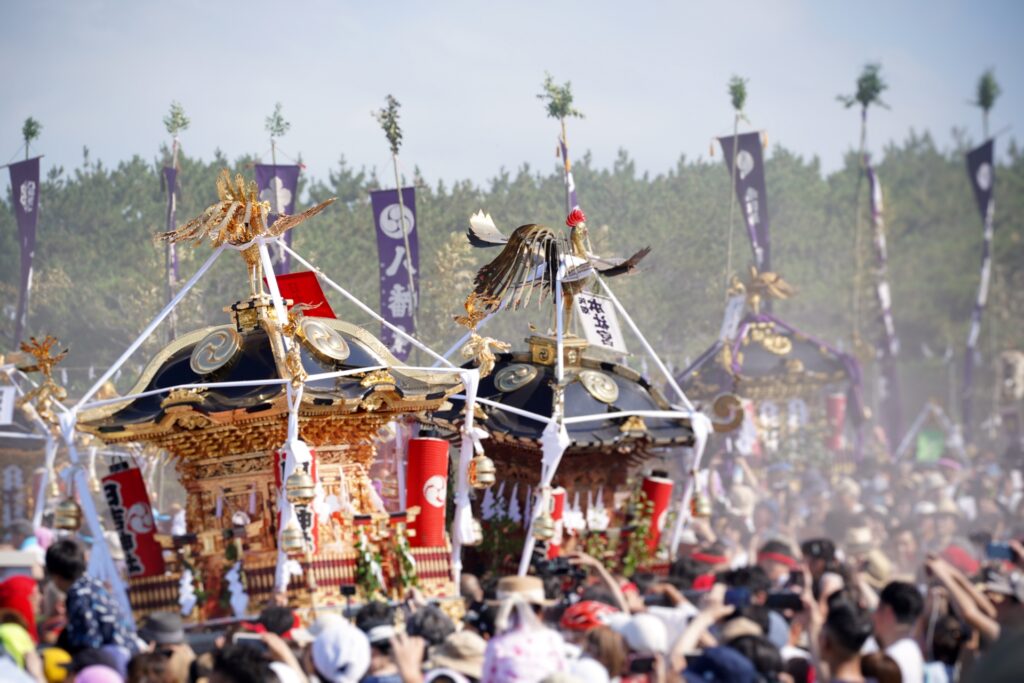
A jinja is a place where the kami are invited to dwell and where people serve the kami who reside there. This service to the kami is itself the matsuri. A matsuri, in other words, is an important rite performed to delight the kami.
Interestingly, the Japanese word matsurigoto has long been written with the character for “government,” and also with the character for “duties.” This shows that serving society as a whole is also a matsuri in the broadest sense.
Two Main Kinds of Matsuri at a Jinja
The matsuri held at jinja today can be divided broadly into two kinds.
1. Matsuri Held by the Jinja Itself
These are matsuri that the jinja performs on its own initiative. They are classified into four grades according to their importance: grand matsuri (taisai), intermediate matsuri (chusai), minor matsuri (shosai), and other matsuri (also read shosai, but written with a different character).
- Grand matsuri (taisai): The most important matsuri, such as those connected with the enshrinement of the kami at the jinja, the Reisai (the annual Grand Festival, normally the highlight of the jinja’s ritual year), the Niinamesai (giving thanks for the harvest), and the Kinensai (praying for a bountiful harvest).
- Intermediate matsuri (chusai): These include matsuri closely tied to the Imperial family, such as the Saitansai on New Year’s Day, the Tenchosai on the Emperor’s birthday, and the Meijisai on November 3, the birthday of Emperor Meiji.
- Minor matsuri (shosai): Matsuri on a smaller scale than the grand and intermediate matsuri.
2. Matsuri Requested by People (Such as Gokito)
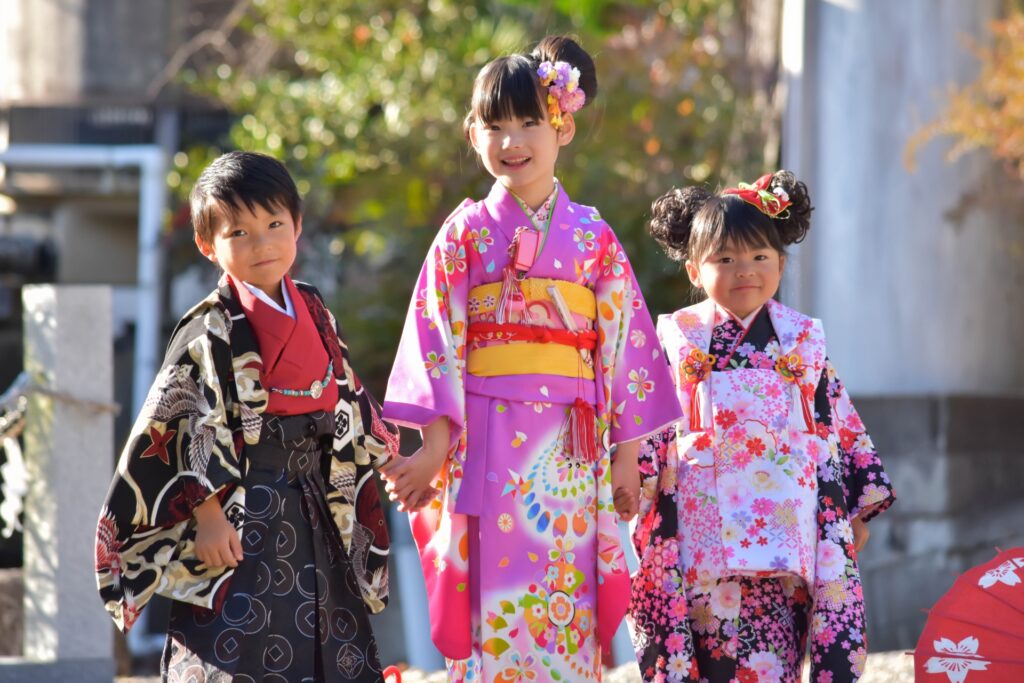
In fact, a gokito, a ceremony that ujiko (local parishioners) or sukeisha (people who revere the jinja, wherever they live) ask the jinja to perform, is also a kind of matsuri. These include hatsumiyamairi, a baby’s first visit to a jinja; Shichigosan, for children aged three, five, and seven; ceremonies reporting life milestones to the kami, such as starting school, graduating, or starting a job; prayers for the safety of the household, for a prosperous business, for recovery from illness, and for protection from misfortune; and ceremonies reporting a marriage to the kami. These are performed as other matsuri (shosai), at the request of ujiko and sukeisha.
What Happens During a Matsuri?
Whatever its size or kind, every matsuri shares the same underlying purpose.
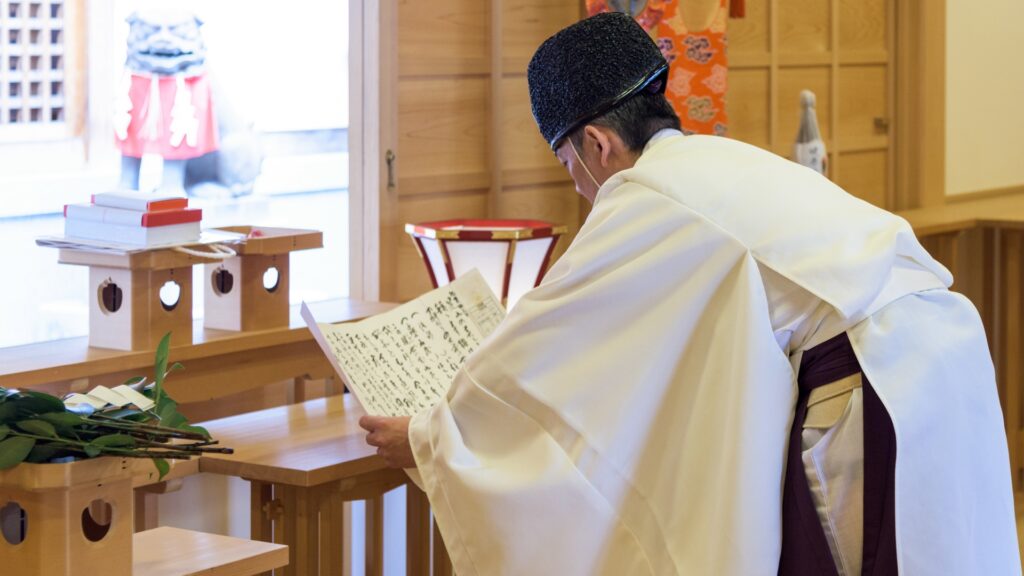
At a matsuri, shinsen, the food offerings, are presented to the kami as a meal, to welcome and delight them. A Shinto priest then recites words to the kami called norito. By delighting the kami in this way, people receive their blessings, and pray for the peace and prosperity of the Imperial family, the nation, and the local community, and for the flourishing of those who have made a request. This is the purpose of a matsuri.
A Matsuri Every Single Day: Nikkusai
At jinja, a matsuri called nikkusai is held every day.
At nikkusai, offerings are presented for the kami to partake of, and the priests pray for the peace of the parishioners and those who revere the jinja, and for peace in the world. Jinja Honcho, the Association of Shinto Shrines, likewise explains that “a matsuri is performed every day to make the daily food offerings to the kami.”

One place where you can see this daily nikkusai up close is Yahiko Jinja in Yahiko Village, Niigata, the foremost shrine of Echigo, the old name for the Niigata region. Except on some days, anyone can attend the rite, called Onikkusai here, every morning.


