


Ema are small wooden plaques with painted images and a space to write your personal wishes to the kami, hung in designated areas of the jinja (Shinto shrine) grounds. Even today in Japan, during entrance exam season, mainly in winter, you will see countless ema offered with prayers to pass. But why are these wooden plaques for writing wishes called ema, literally “picture horse”? This article introduces the surprising origin and history of ema.
目次
It All Began with Real, Living Horses

Ema originate from the custom of presenting real horses to the kami. Eighth-century texts such as the Hitachi no Kuni Fudoki, a record of Hitachi Province (present-day Ibaraki Prefecture), and the Shoku Nihongi, an official history of Japan, record living horses being presented with prayers for rain, or for rain to stop. Even then, horses were thought of as the mounts of the kami, and a horse presented in this way was specially called a shinme, a sacred horse.
From Horse Statues to Painted Plaques

Presenting a real, living horse every time, however, was no small undertaking. Over time, horse statues came to be offered in place of real horses, and these were later simplified into the painted wooden plaques we know as ema today. And as mikoshi (portable shrines) came to serve as the main vehicle of the kami, the role of the shinme changed to simply accompanying the kami.
Why Were Horses So Special?
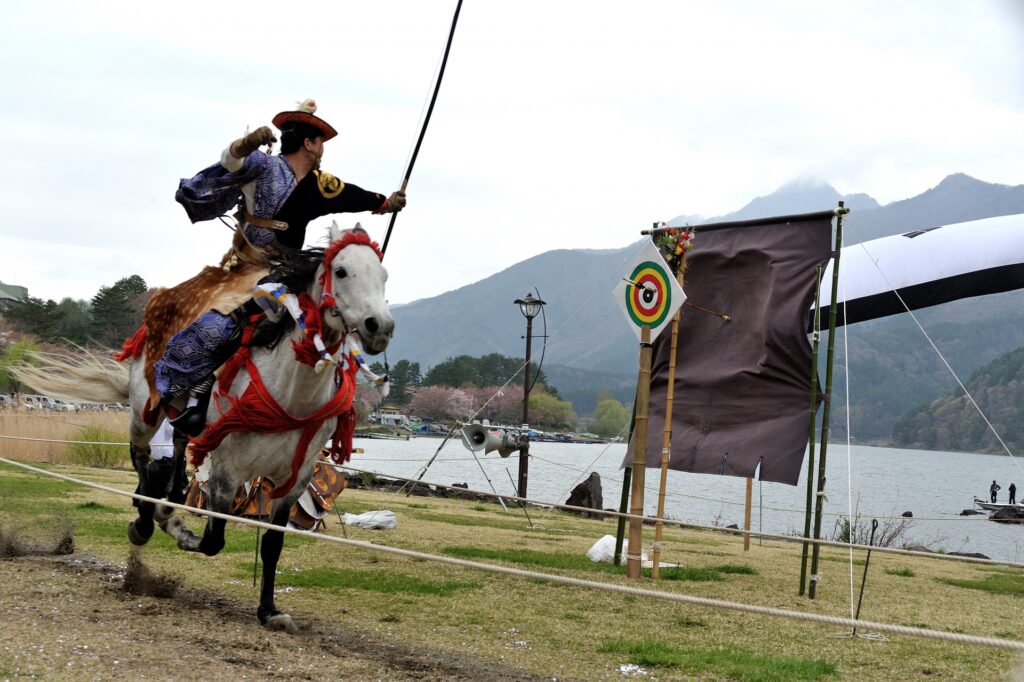
Horses have long played a major role in every part of people’s lives, from transport and farming to warfare. Beyond this, horses also held meaning in matters of faith.
One example is Aouma no Sechie, a court ceremony of the Heian period (794–1185), held on the seventh day of the new year, when the emperor viewed white horses. In the theory of yin-yang and the five elements, the white horse was regarded as a sacred animal of yang, and seeing one was thought to drive away the ill fortune of the year. This ceremony was later taken up at jinja across Japan as a rite to ward off misfortune and invite good fortune.
Ema Today Come in Many Designs

Originally, as the name suggests, ema bore pictures of horses. But as times changed and people’s wishes grew more varied, the pictures gradually changed too. Today you can find many kinds of ema, from scenes of matsuri (festivals) and the animal of the Chinese zodiac for that year to designs expressing prayers for recovery from illness or for progress in the performing arts.


