Yahiko Jinja: Walk Echigo’s Foremost Shrine, Framed by Mount Yahiko, with a Certified Guide
¥5,000
The Same Grounds Look Different Once You Know
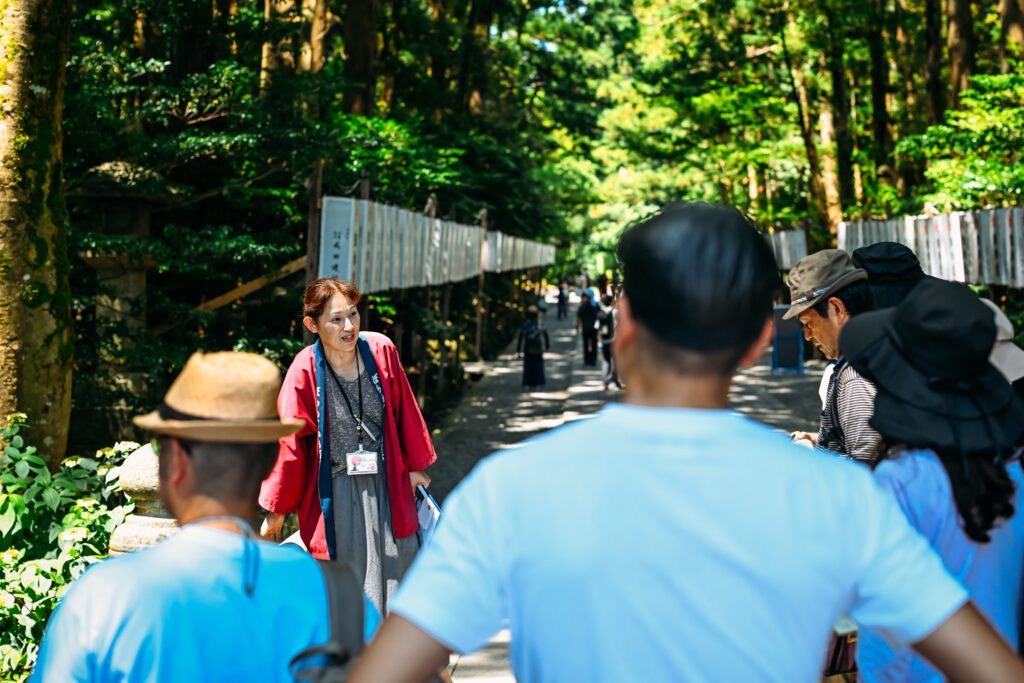
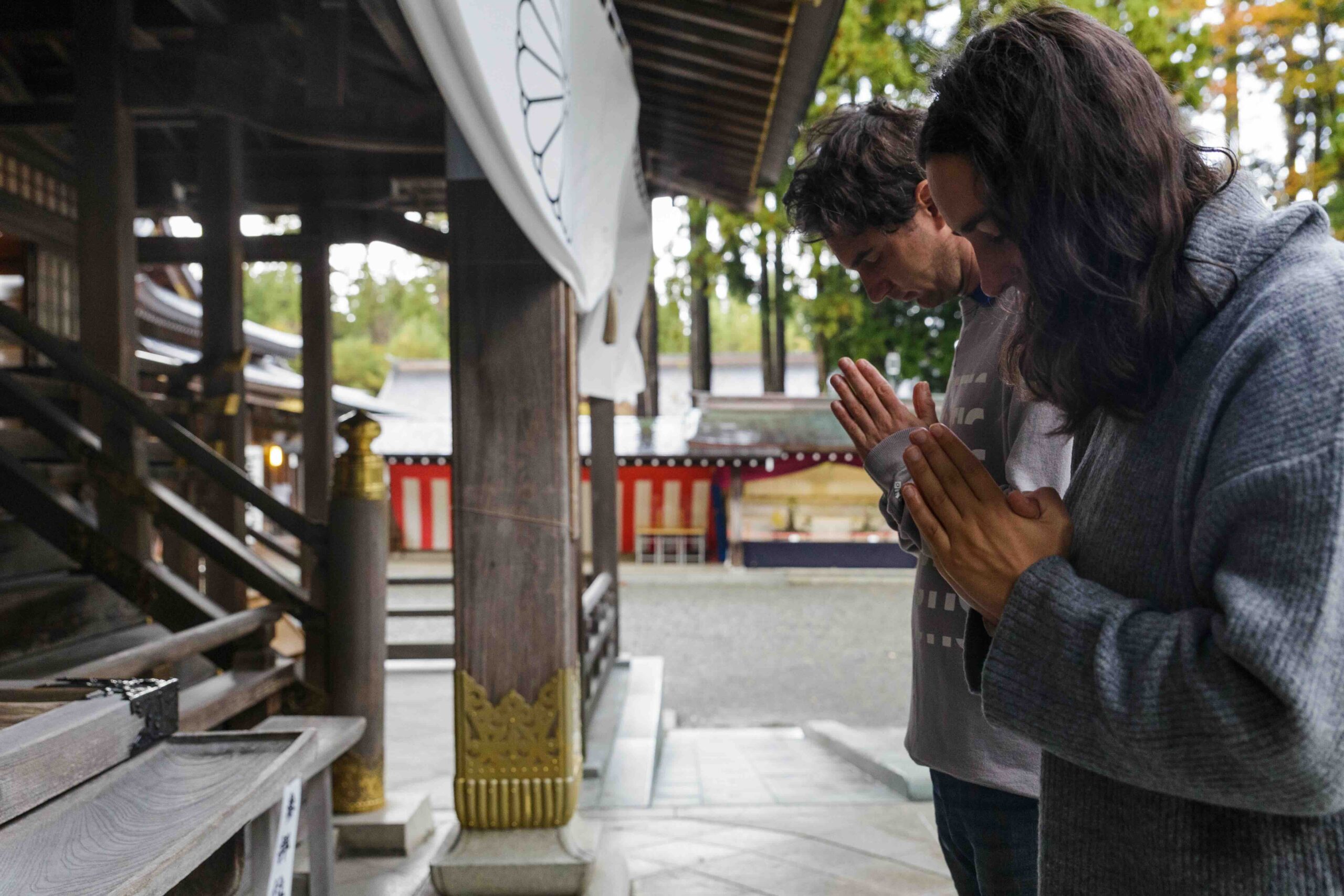
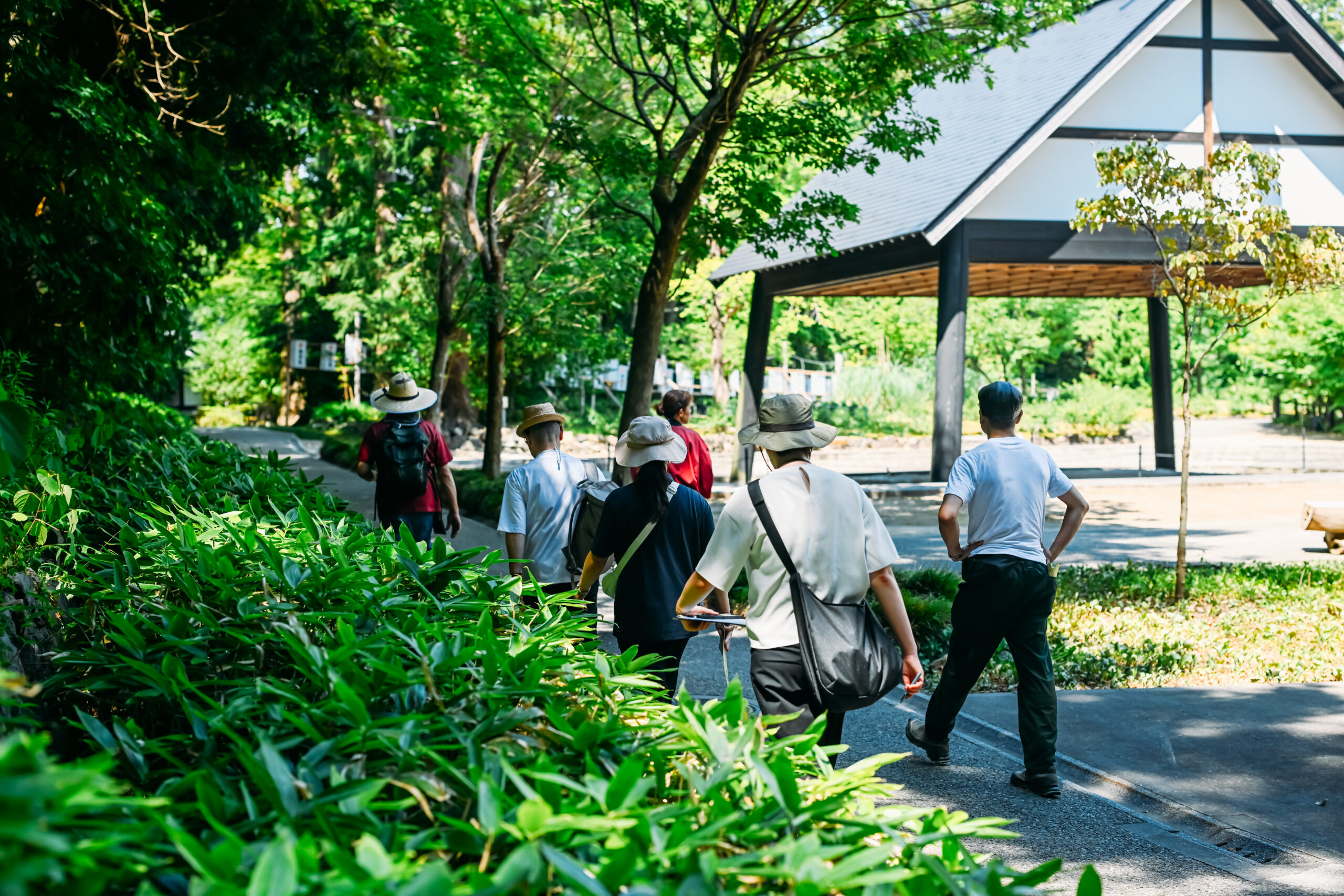
Yahiko Jinja, the Ichinomiya (foremost jinja) of Echigo Province, has long been known to the people of Niigata simply as “Oyahiko-sama.” Here, you walk its grounds with a guide certified by the Yahiko Tourist Association.
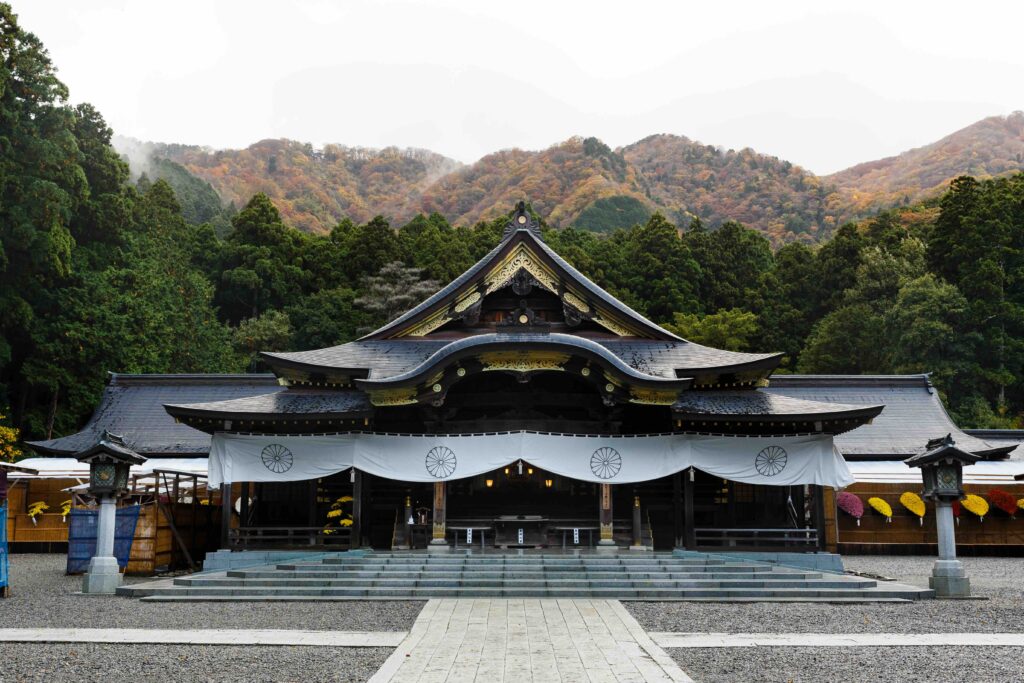
A great torii 8 meters tall, a bridge only the kami may cross, grounds where deer and chickens wander, and a prayer hall that seems to carry Mount Yahiko on its back. With each story your guide adds, you begin to see the “story of Yahiko” that most visitors walk right past.
By the end of the walk, you will understand why this jinja (Shinto shrine) has remained at the heart of life in Echigo for more than a thousand years.
- ●Explore Yahiko Jinja, Echigo’s foremost shrine, with a certified guide (90 minutes, including time in the shrine town)
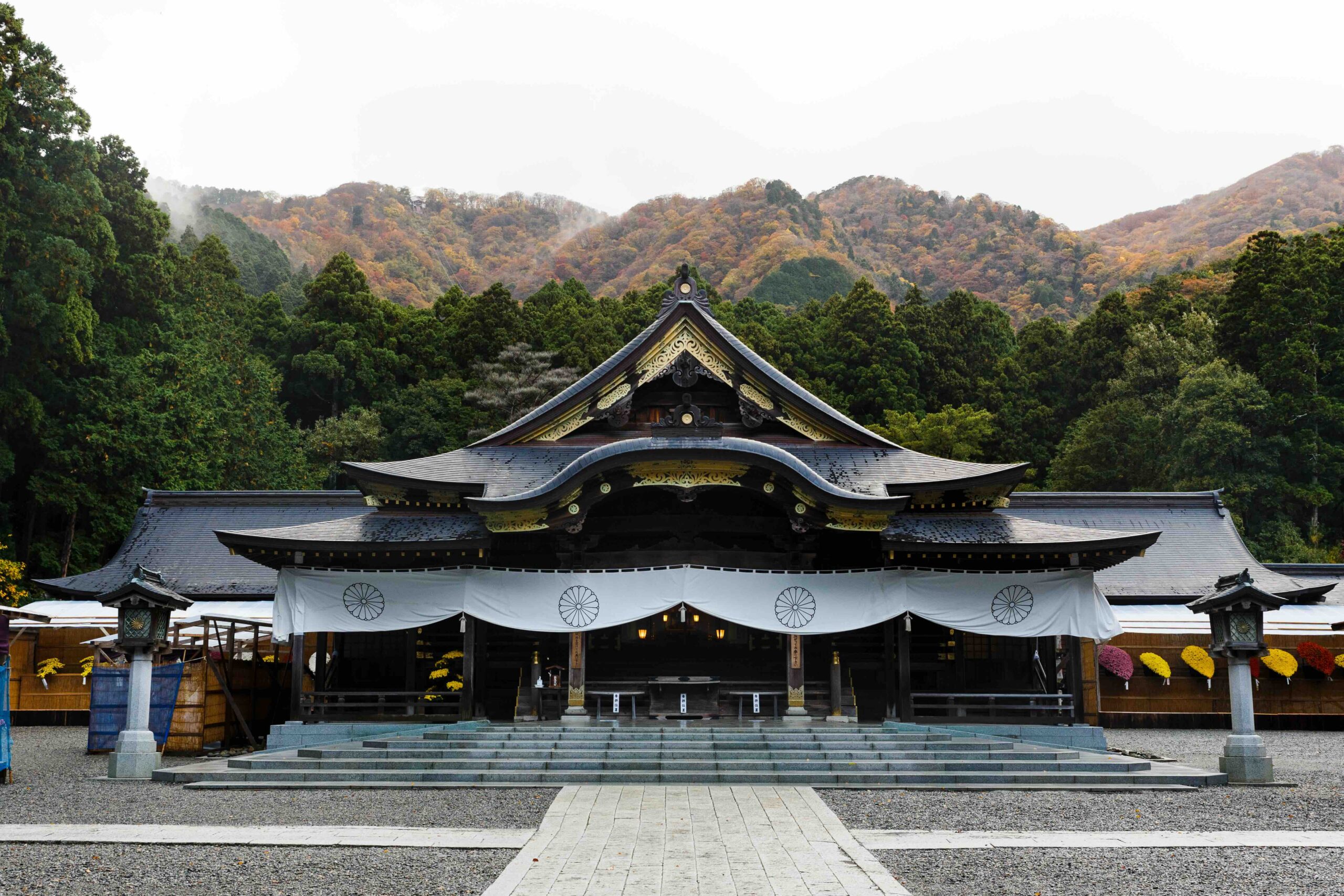
- ●See Mount Yahiko rising behind the prayer hall, shrine and mountain in a single view
- ●Visit lesser-known auxiliary shrines, including the thatched-roof Tobashira Jinja, an Important Cultural Property of Japan
- ●Solo travelers welcome. ¥5,000 per group for up to 5 people
Details
Through the First Torii
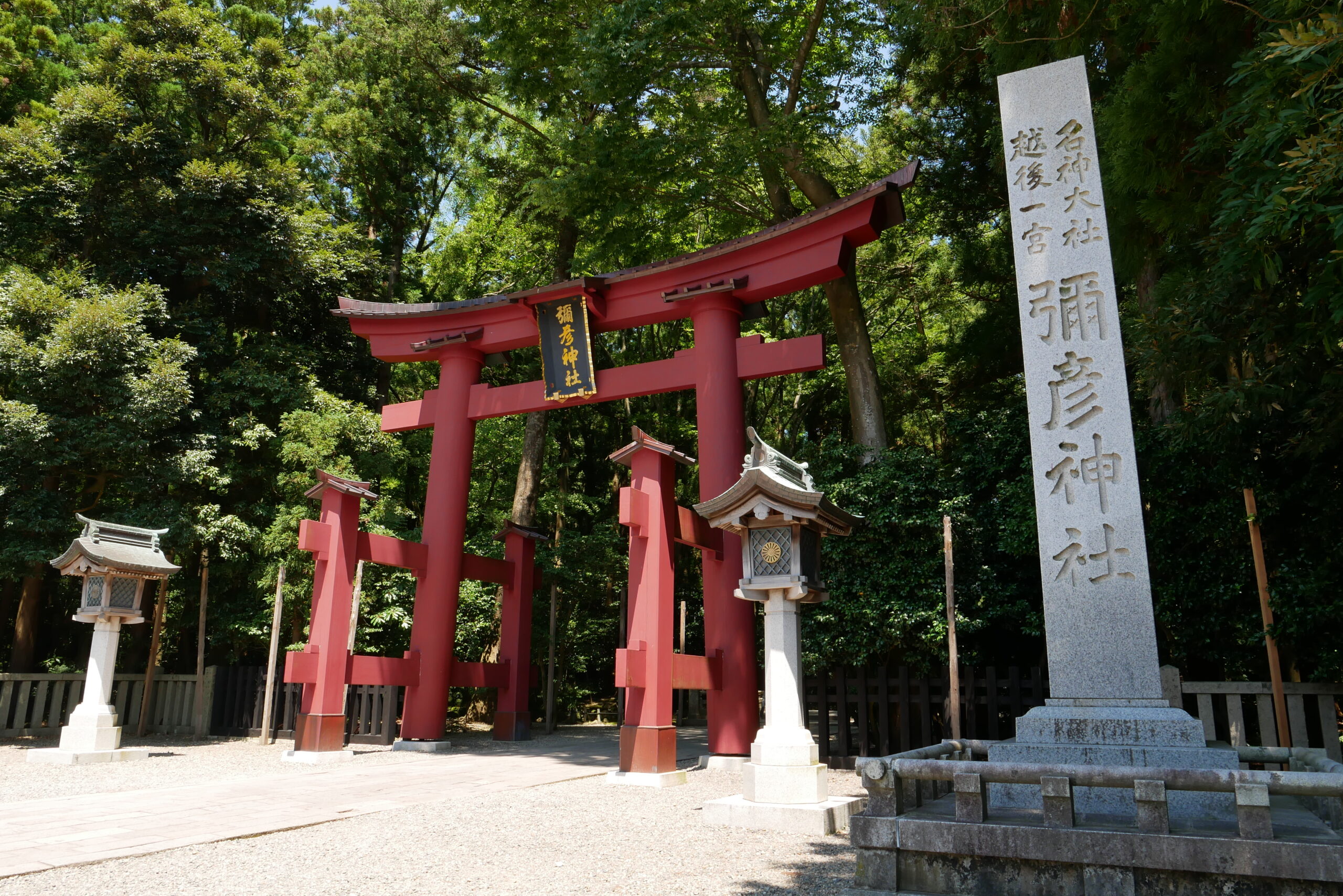
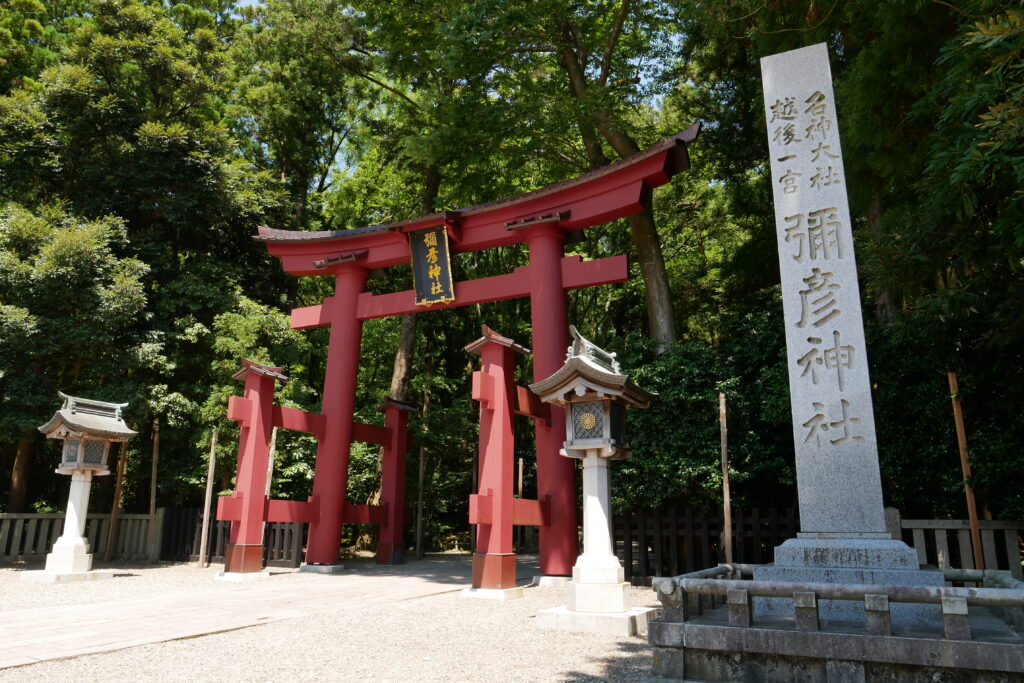
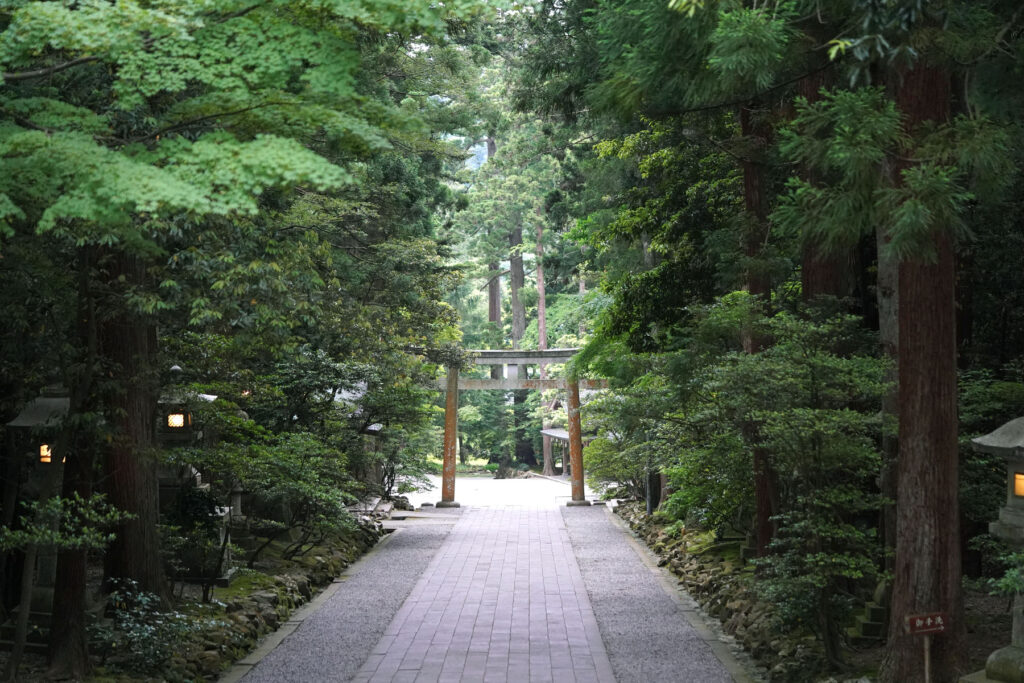
You meet in front of the Ichi-no-Torii, the first torii at the entrance to the sacred grounds. Standing 8 meters tall and supported by six pillars, it is a rare style known as a ryobu torii. Look up from close by, and its scale takes you by surprise.
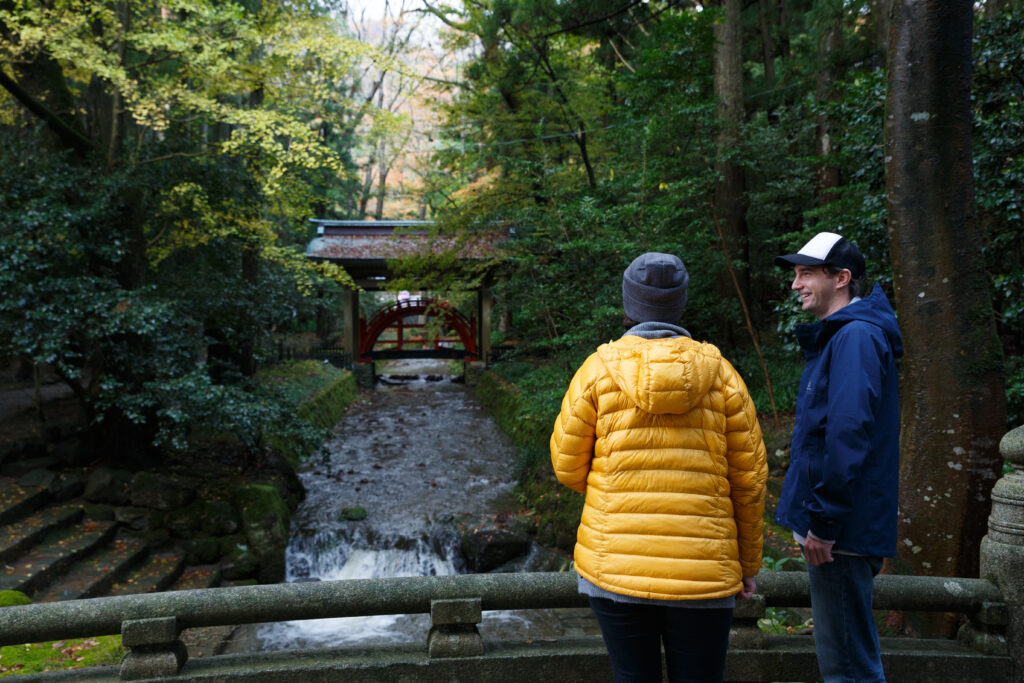
Beyond the torii runs the clear Mitarashi River. Farther on stands the Tama-no-Hashi, a bridge said to be crossed only by the kami.
Past the Deer and Chickens, to the Prayer Hall
Along the approach, you come to an area where deer and chickens live. It is a spot where visitors can’t help but stop.
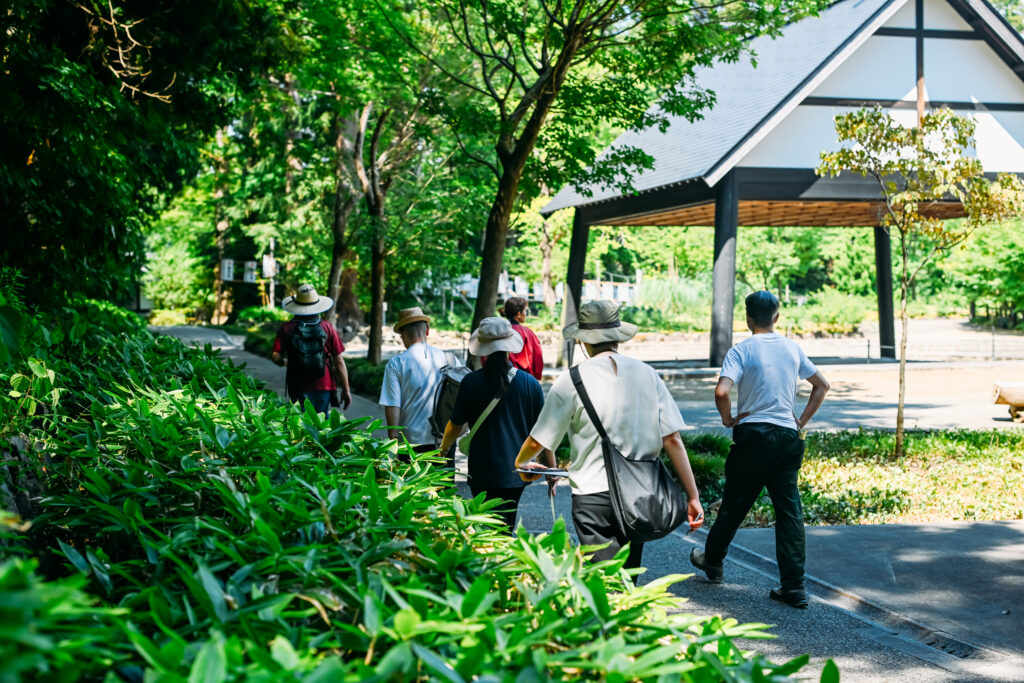
Stand before the prayer hall, and Mount Yahiko rises directly behind it. Hall and mountain become a single view, one found only at Yahiko Jinja.
The halls you see today were rebuilt in the Taisho era (1912–1926) with donations from across Japan and abroad, after a fire in the Meiji era (1868–1912) destroyed them. In 2025, they marked 110 years since their reconstruction. The only structure to survive that great fire was the Tama-no-Hashi, the bridge reserved for the kami. It is said to protect against fire, and your guide will tell you what happened on that day.
The Auxiliary Shrines
Deep within the wide grounds stand auxiliary shrines honoring kami closely tied to Yahiko Jinja.
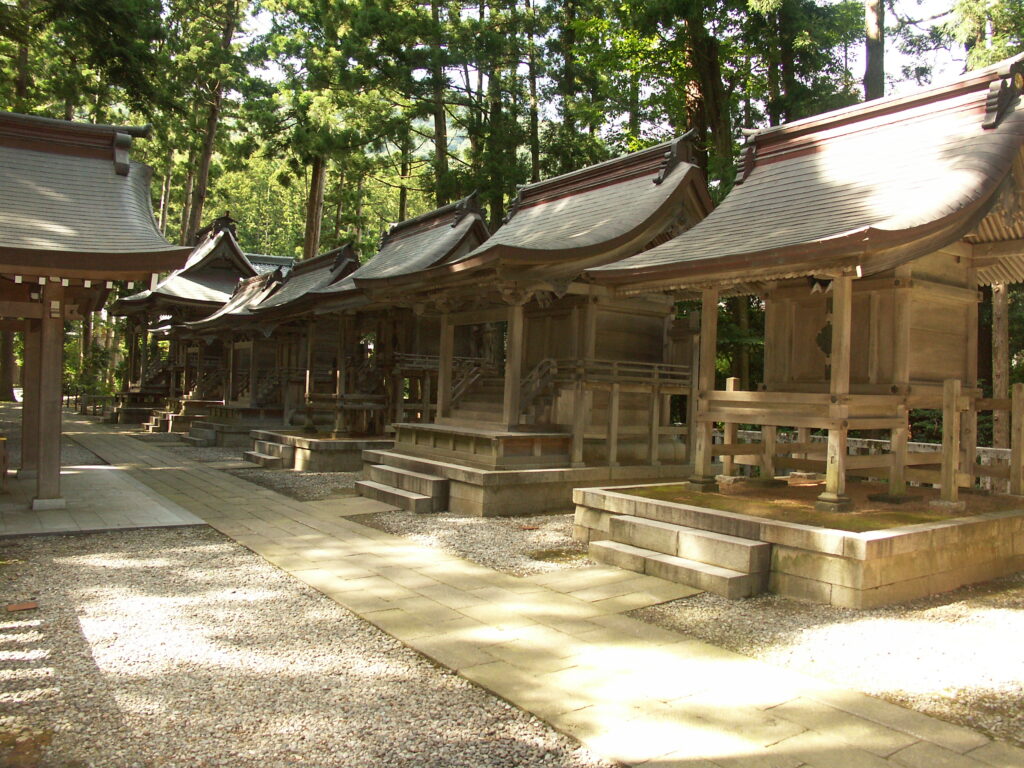
The one that catches the eye is Tobashira Jinja, a thatched-roof shrine built more than 300 years ago and designated an Important Cultural Property of Japan. There is Nijunisho Jinja, honoring the kami of Ise Jingu and other renowned jinja, and Katsu Jinja, known for teaching not “winning” in the usual sense of katsu, but devotion to one’s parents. Each small shrine has its own story.
Into the Shrine Town (about 30 minutes)
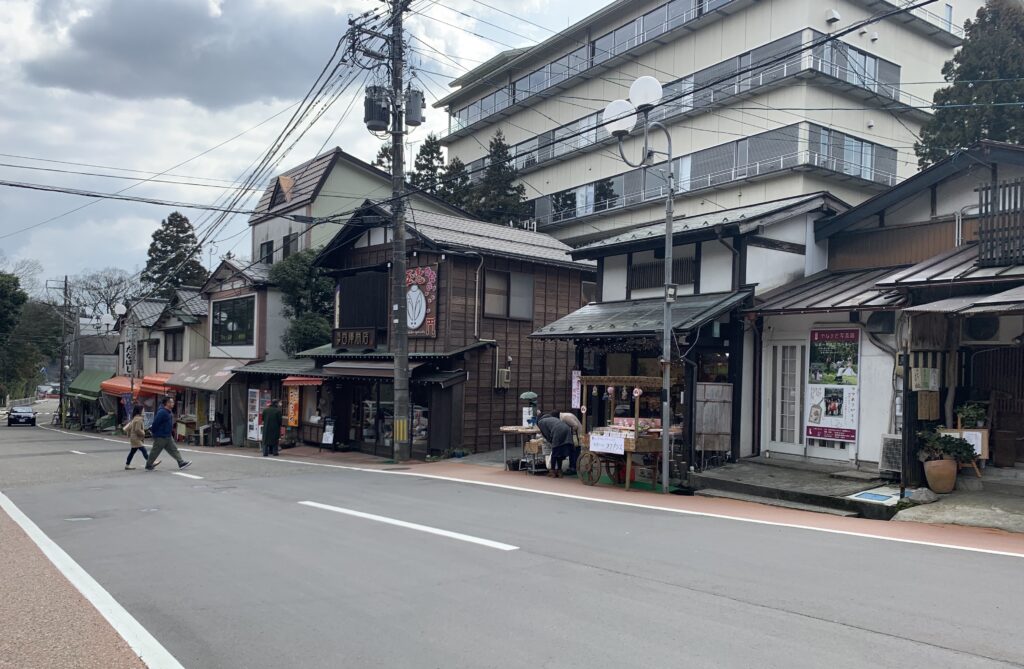
After the guided walk, you explore the shrine town: long-established souvenir shops and cafés, Japanese-style cafés in renovated old houses, and local sweets such as Yahiko Pudding and Panda-yaki.
Who Guides You
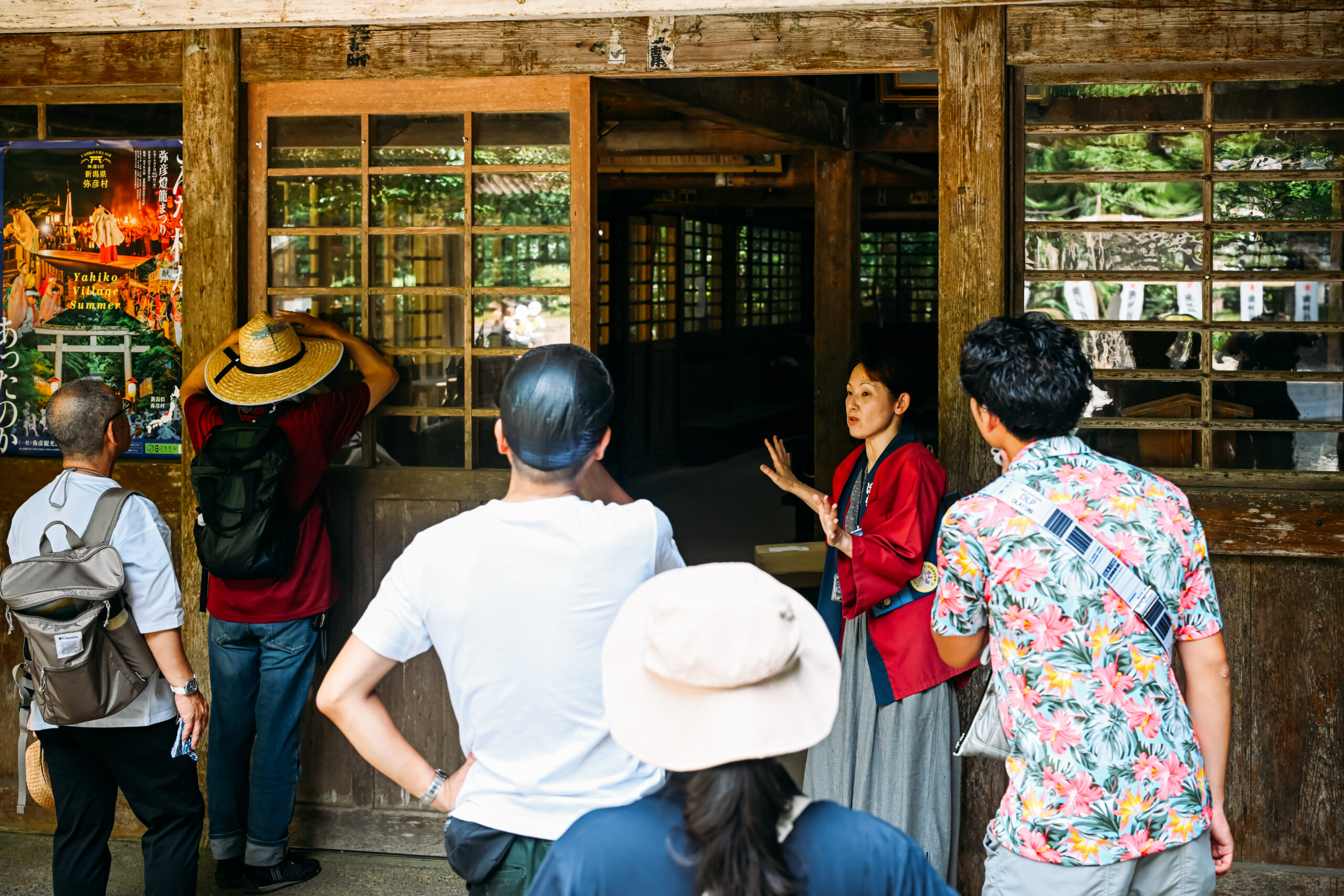
A guide certified by the Yahiko Tourist Association
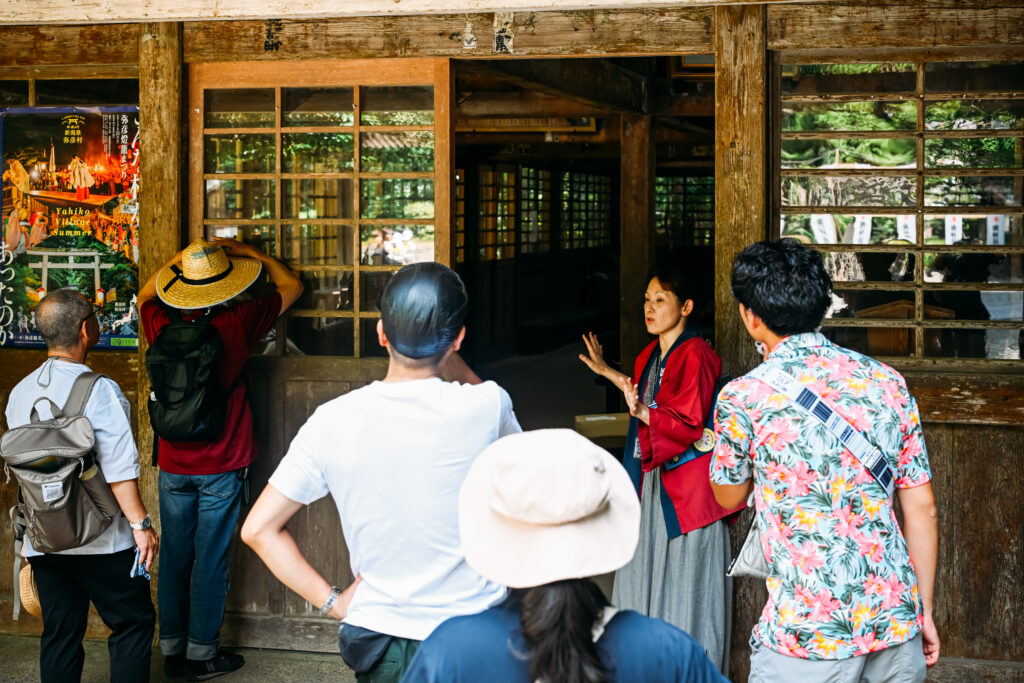
A guide who knows Yahiko inside out tells the history, myths, and yearly rites of the jinja as stories.
Taking Part in English
The tour is guided in Japanese. If you would like an English interpreter, please request one when you book (+¥15,000 per group).
Going Deeper: Yahiko Jinja, Echigo’s Foremost Shrine
The Kami Who Opened Up Echigo
The enshrined kami is Amenokagoyama-no-Mikoto, a great-grandson of Amaterasu-Omikami. In Japanese myth, when Emperor Jimmu struggled on his campaign to the east, this kami presented him with the sacred sword Futsu-no-Mitama, playing a great part in his success.
The kami is then said to have crossed the Sea of Japan to Echigo and taught its people fishing, salt making, farming, and sake brewing. Revered as “the founder who opened up Echigo,” the kami is still deeply honored today.
Rites That Continue Today
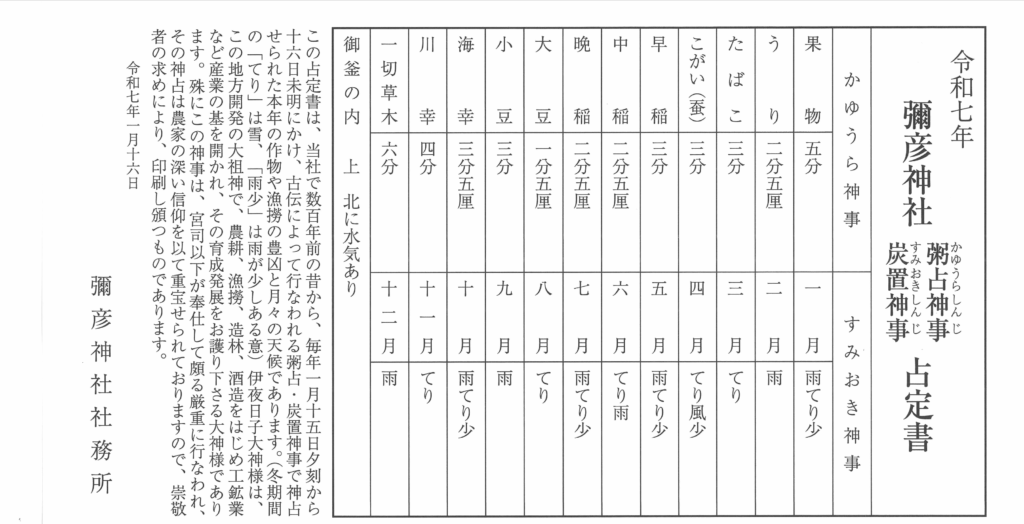
Every January 16, the Kayura Sumioki Shinji uses rice porridge and charcoal to divine the year’s harvest and weather; its results are published each year.
Every July 24–26, the Toro Shinji lantern festival, designated an Important Intangible Folk Cultural Property of Japan, takes place. Held for more than a thousand years to pray for a bountiful harvest and protection from disease, it is Yahiko’s largest summer festival; its highlight is the Toro-oshi, in which lanterns are pushed into one another.
Even outside the festival season, your guide can share the background of these rites.
How to Book
Step1
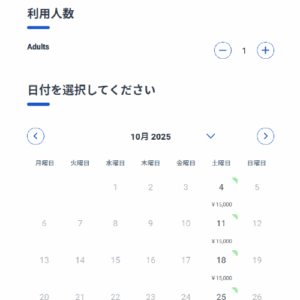
Please check the calendar to confirm the date, time, and number of reservations, and then make your selection.
Step2
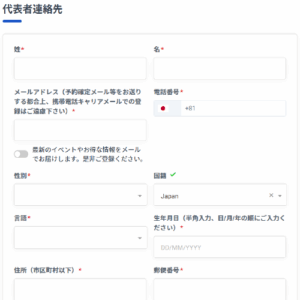
Please enter the information required for registration (name, date of birth, address, etc.).
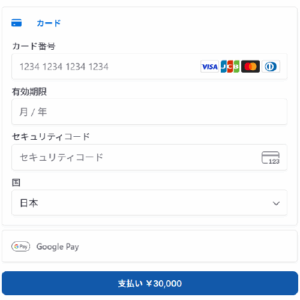
Step3
Please select a payment method, enter your payment information, and complete the payment. A confirmation email will be sent to the email address you provided, so please check your inbox.
Access
Yahiko Jinja first torii
Yahiko, Yahiko Village, Nishikanbara District, Niigata 959-0323
◾️By train
From Tsubame-Sanjo Station on the Joetsu Shinkansen, change to the Yahiko Line and ride to the last stop, Yahiko Station.
On the Shinetsu Line, change to the Yahiko Line at Higashi-Sanjo Station, or on the Echigo Line at Yoshida Station, and ride to the last stop, Yahiko Station.
◾️By car
About 15 km from Sanjo-Tsubame IC on the Hokuriku Expressway; about 5 km from Yoshida on National Route 116.
◾️Pickup
Free pickup is available from Tsubame-Sanjo Station (Joetsu Shinkansen).
Overview
- Price
- 1–5 guests: ¥5,000 per group (tax included)
6 or more guests: ¥5,000, plus ¥1,000 for each guest from the sixth
Included: guide fee
English interpreter, if requested: +¥15,000 per group
Free pickup is available from Tsubame-Sanjo Station (Joetsu Shinkansen). - Group Size
- 1 to 15 guests
- Itinerary
- 1.Meet in front of the Ichi-no-Torii (first torii) of Yahiko Jinja (please arrive by the start time)
2.Guided walk of the Yahiko Jinja grounds (about 60 minutes)
3.Free time in the souvenir shops of the shrine town (about 30 minutes)
Duration: about 90 minutes
Please note that this is a guide only; details may change according to conditions on the day.
- What to Bring and Wear
- ●Comfortable walking shoes
●Clothes you can move in
- Payment
- Payment is made in advance by credit card.
- Who Can Take Part
- Guests aged 6 and over. Guests under 12 must be accompanied by a parent or guardian.
- Booking Deadline
- Up to two weeks before the date of the experience.
- Notes and Disclaimer
- Please note in advance that the experience may be canceled, or its content changed, for unavoidable reasons.
- Frequently Asked Questions
- ◾️How do I get there from the station?
Free pickup is available from Tsubame-Sanjo Station (Joetsu Shinkansen).
◾️Can I take part in winter?
Yes. This experience runs all year round.
◾️Is the tour guided in English?
The tour is guided in Japanese. You may request an English interpreter when you book (+¥15,000 per group).
◾️May I take photographs during the experience?
You are welcome to take photographs. Please do so with respect for the jinja, with consideration for other guests, and in keeping with good manners.
◾️Is there parking?
Please use the parking lots around Yahiko Jinja.
Cancellation & Refund Policy
INORI experiences are package tours planned, offered, and operated by LAMBDA JAPAN. By booking, you enter into a package tour contract with us.
■ Booking and formation of the contract
The contract is concluded when our confirmation notice reaches you by e-mail or other means.
■ Cancellation fees
Cancellations made for reasons on the customer’s side are subject to cancellation fees. Please refer to the schedule below for the applicable rates.
The following periods are counted back from the day before the tour start date.
| Notice Period | Cancellation & Change Fees | |
|---|---|---|
| Counting backward from the day before the trip begins | a. Cancellation on or before the 12th day (the 21st day for tours with overnight stays) | Free |
| b. Cancellation on or before the 11th day (the 20th day for tours with overnight stays) | 30% of the tour price | |
| c. Cancellation on or after the 7th day, or no-show without notice | 100% of the tour price | |
■ Refunds
For credit card payments, refunds are issued to the card registered at the time of booking. (Payment is finalized when you book; if the booking is changed, the refund is processed to the same card. Depending on your card company, the refund may not appear until the following month, so please check your card statement.)